Bohio Design Studio
How a seven-minute voice note became an interior design brand
A Pinterest folder, WhatsApp feedback and a lot of listening became Bohío’s services, voice, website, client process and launch system
Estefania had a point of view before she had a brand.
Estefania and I are college friends. We both went to Interior Design and Architecture School. She always knew homes should feel personal. She cared about working with what people already owned, making small spaces easier to live in and creating design that respected someone’s culture, routines and budget.
When she started with Bohio, she was unaware of all of the pieces necessary to have her brand work. We needed to have a lot of clarity to ensure the image of her brand would get built the right way. All I had was a Pinterest folder, feedback scattered across WhatsApp and one seven-minute voice note where she finally told me what Bohío meant to her.
And to my pattern connecting mind, that was all enough.
What she needed
Bohío needed more than a logo and a nice website. It needed to behave like a real interior design business.
Someone had to turn Estefania’s ideas into services people could understand, language she could keep using, a client process she would not have to create from scratch every time and a website that made the whole thing feel connected.
She did not need another document full of brand adjectives. She needed the business hiding inside her ideas.
The seven minute voicenote
The first version of the brand voice was clear, but it was missing her. So I asked Stefania to stop trying to explain Bohío like a business and tell me what she actually cared about.
That voice note gave me the part no template could: preserving pieces with a story, repurposing before replacing, making good design feel possible on a real budget and bringing Caribbean creativity into modern homes without turning culture into decoration.
From there, Bohío became warm, resourceful, practical and culturally rooted. The language could explain the work without sanding down the reason Estefania wanted to do it in the first place.
What I built
I turned that direction into the structure Bohío needed to operate and launch. That included:
Market research, positioning and an ideal-client profile
A four-level service system: Bohío Express, Essentials, Signature and Pro
Package scope, pricing logic, timelines, revisions and delivery details
Brand voice, messaging and language for each service
A client intake form, onboarding workflow, agreement template, welcome materials, confirmation emails and a project wrap-up form
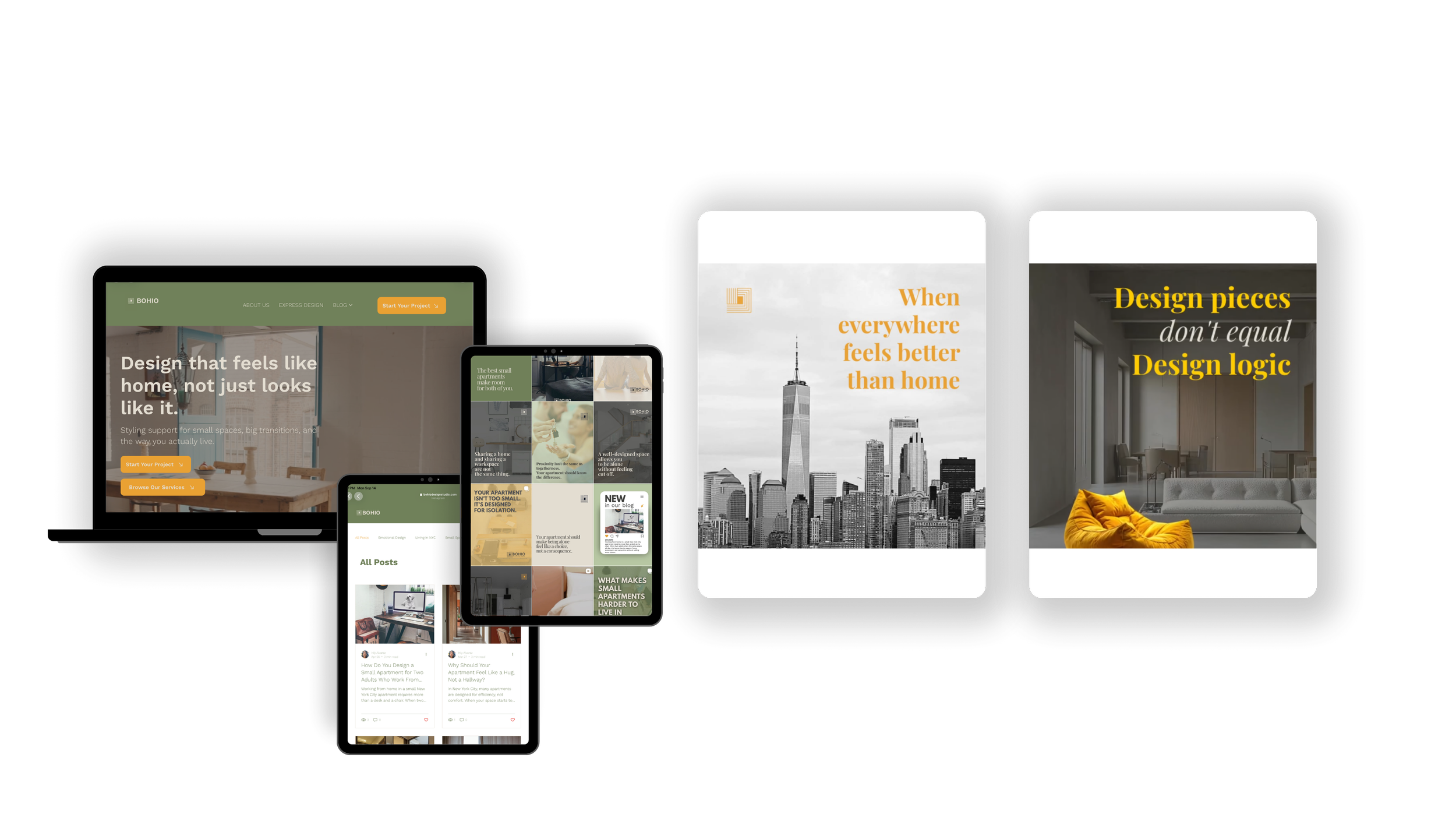
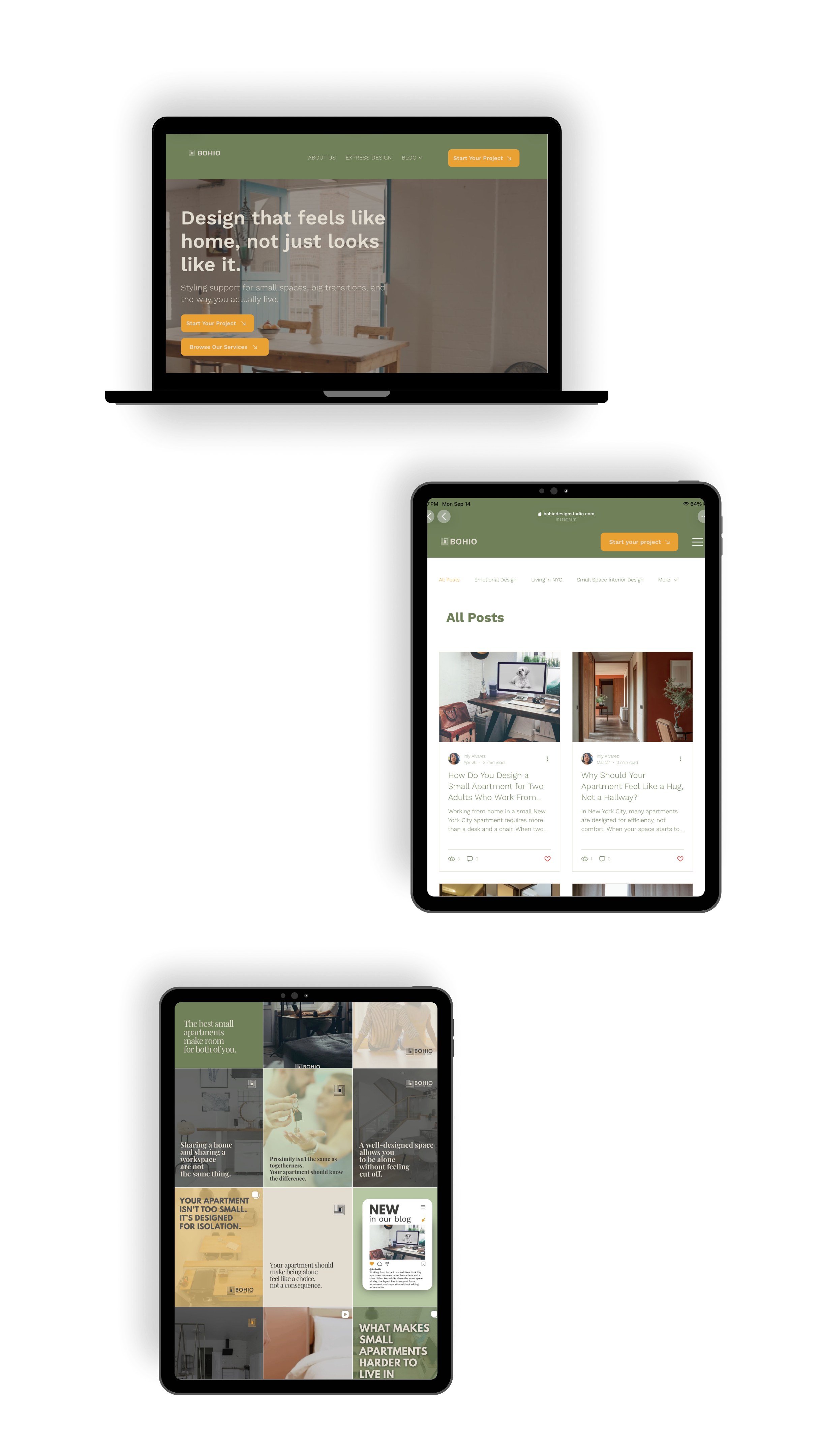
Website strategy, copy and custom layouts for the homepage, About page, Services page and individual service pages
Color and typography implementation, mobile adjustments, basic SEO, domain setup and Google Search Console
A brochure, service quiz and client-facing tools
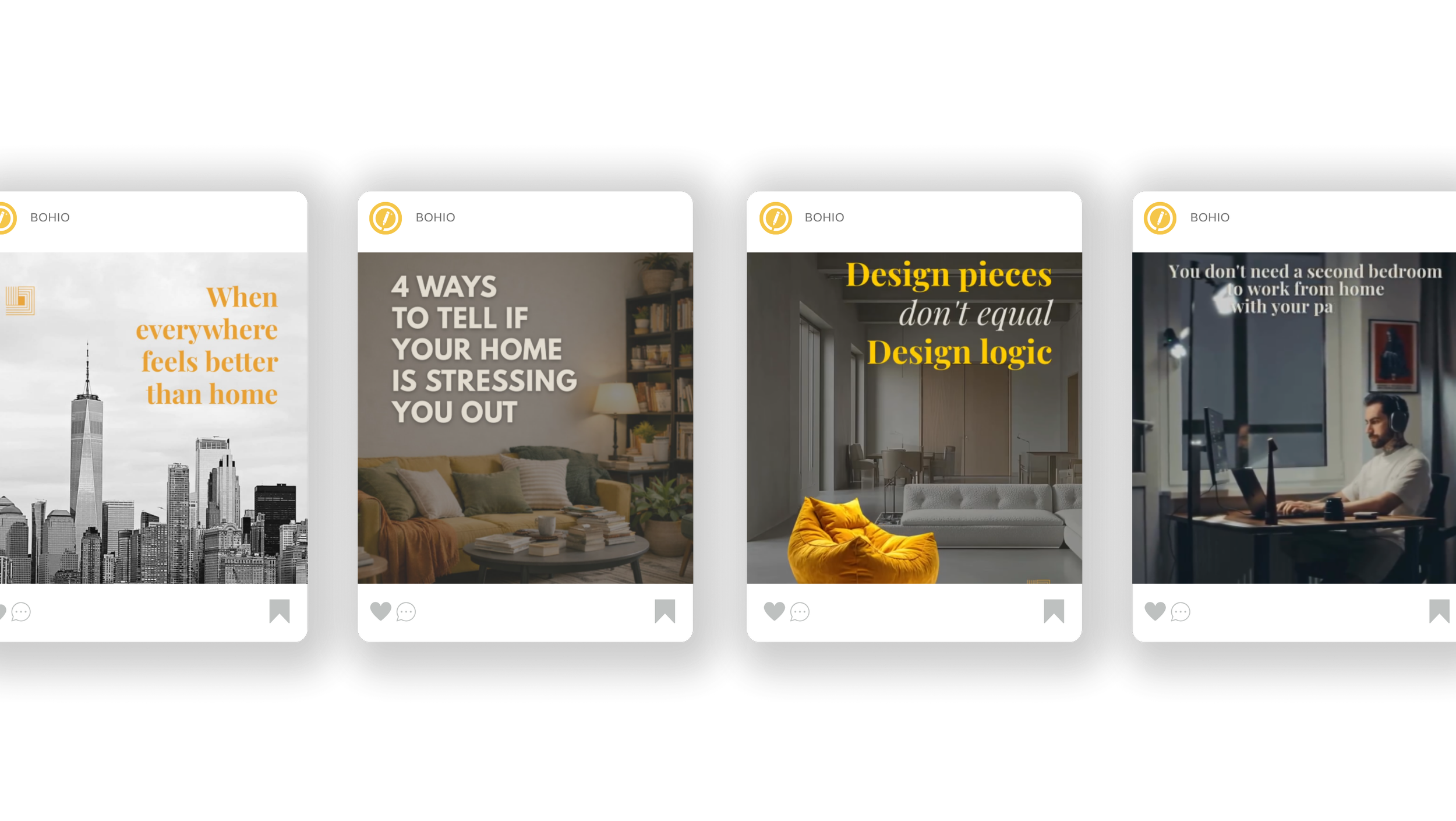
An Instagram launch direction, content strategy, templates, first posts, captions, carousels, reels and early SEO articles
Estefania had the vision and the logo. My job was to build the business around it.
The website had to do more than look like an interior design website.
Every page had to answer a practical question. Who is Bohío for? What happens after someone reaches out? Which service fits a quick decision, a DIY client, a full-room plan or a business space? What will the client receive, and what happens next?
The visual direction came from the world Estefania had already collected. The structure came from figuring out how a potential client would move from “I like this” to “I understand what I can hire her for.”
That is the part people do not see when they look at a finished website. A pretty page can introduce the mood. It still needs an actual business underneath it.
What Bohío had by the end
Bohío had a defined point of view, four clear ways to work together and a client process that could carry someone from inquiry to delivery. It had website copy, service pages, launch content, SEO foundations and the tools Stefania would need to run a project without rebuilding the process for every new client.
The brand could finally explain what she had been trying to say from the beginning: a home is not finished when it looks perfect. It is finished when it feels like you.
The part I care about
Estefania did not need to arrive speaking in positioning statements, customer journeys or service architecture. She needed to sound like herself for seven minutes.
My job was to hea the business inside that voice note, connect it to everything else she had shown me and build the structure around it.
Some brands begin with a workshop and a very organized brief. Bohío began in WhatsApp and a Pinterest folder, which is usually much closer to how people actually have ideas.